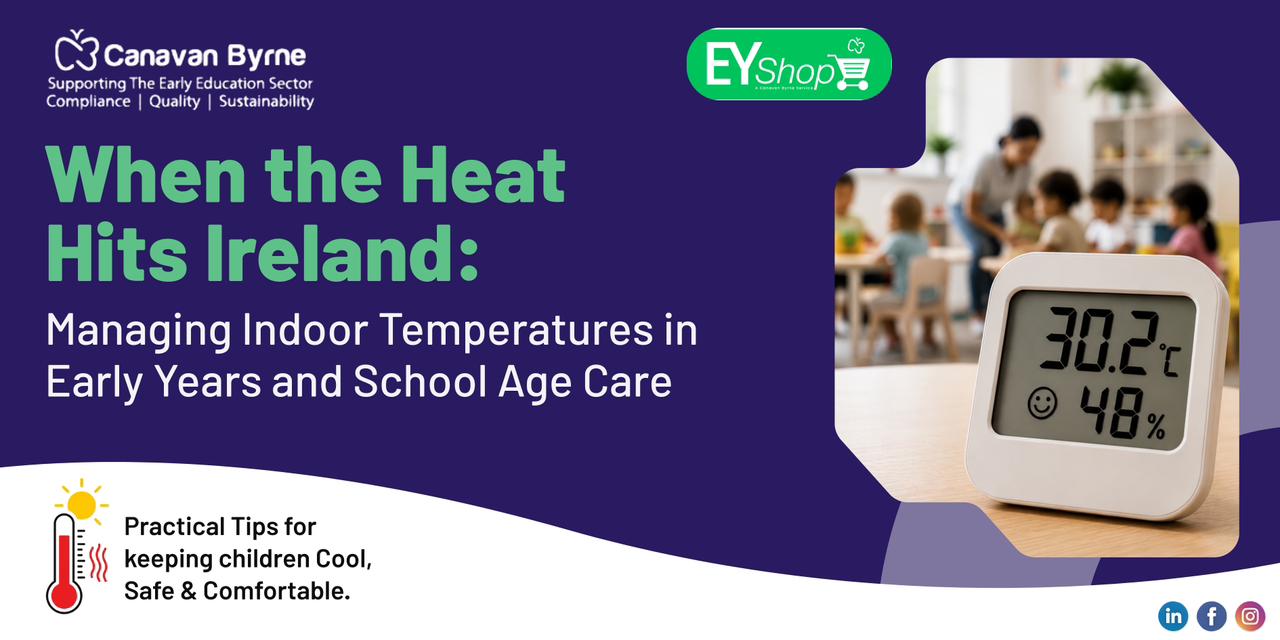
When a heatwave arrives in Ireland, it is usually welcomed with open arms. After all, warm sunny days can be few and far between, and many of us are eager to make the most of them while they last.
For those working in Early Years and School Age Care settings, however, hot weather brings additional responsibilities. Young children are particularly vulnerable to heat-related illness as they are less able to regulate their body temperature than adults. As providers, we have a responsibility to ensure that children remain safe, comfortable, and well cared for during periods of elevated temperatures.
Here are some practical ways services can help manage indoor temperatures and create a cooler environment for children and staff.
Start with Good Ventilation
Well-ventilated premises are one of the simplest and most effective ways to reduce indoor temperatures.
As a guide:
Playrooms should ideally be maintained between 18°C and 22°C
Sleep rooms should ideally be maintained between 16°C and 20°C
When temperatures begin to rise above these ranges, services should take action and document both the temperatures recorded and any measures implemented.
Temperature monitoring should form part of your risk assessment process. Recording temperatures alone is not enough; the purpose of monitoring is to identify risks early and respond appropriately.
Cool the Building Early
If hot weather is forecast, preparation should begin before the temperature peaks.
The coolest air during a heatwave is usually available early in the morning. Consider asking the first staff member arriving each day to open windows throughout the premises to allow cooler air to circulate before children arrive.
Once the outside temperature becomes warmer than the indoor temperature, partially closing windows can help prevent heat from entering the building while still maintaining airflow.
Good air circulation costs nothing and can significantly improve comfort levels throughout the day.
Make the Most of Blinds and Curtains
Managing sunlight effectively can make a significant difference to indoor temperatures and help prevent rooms from overheating.
During the cooler morning hours, open windows and keep blinds or curtains open to allow fresh air to circulate through the building. As temperatures rise and direct sunlight begins to enter rooms, close blinds or curtains on sun-facing windows to reduce solar heat gain. Preventing heat from entering a room is often more effective than trying to cool it down later.
In playrooms, aim to balance heat reduction with adequate natural light. In sleep rooms, blackout blinds or curtains can help maintain a cooler, darker, and more comfortable environment for rest.
Additional measures such as reflective window films, external shading, awnings, or temporary shade solutions can help reduce heat entering the building, particularly in rooms exposed to prolonged direct sunlight.
Services should identify rooms most affected by direct sunlight and monitor these areas closely during periods of hot weather as part of their overall heat management strategy.
Using Fans Safely
Fans can be a valuable tool for improving airflow and helping children and staff feel more comfortable.
When using fans:
Ensure they are included in your risk assessment.
Position them out of children's reach.
Ensure cables do not create trip hazards.
Never leave portable fans where children can access them.
Some recommendations suggest placing a bowl of ice in front of or behind a fan to create a cooling effect. While this can be effective, it should be carefully risk assessed to ensure that water or condensation cannot come into contact with electrical equipment and that it does not create a safety risk.
Research has also suggested that room ventilation and air circulation may be a protective factor in reducing the risk of Sudden Infant Death Syndrome (SIDS). If fans are used in sleep rooms, they should never be directed straight at sleeping children and should be positioned to circulate air gently around the room.
Consider Air Coolers
Air cooling units can be more effective than standard fans because they use cold water or ice packs to reduce the temperature of the air being circulated, rather than simply moving warm air around the room.
While generally more expensive than fans, they may provide additional cooling and can be particularly beneficial in rooms that become warm during hot weather. As with all equipment used in an early years environment, air coolers should be included in the risk assessment, positioned safely out of children's reach, and maintained in accordance with the manufacturer's instructions. Care should also be taken to ensure that water reservoirs are emptied, cleaned, and monitored regularly to maintain hygiene standards.
Air Conditioning: The Most Effective Option
Air conditioning remains the most effective method of controlling indoor temperatures during periods of hot weather.
Permanent wall-mounted systems are generally the safest and most efficient option for early years environments. While they require a greater initial investment, they are positioned out of children's reach, provide reliable temperature control, and can help maintain comfortable conditions throughout the day, particularly in sleep rooms and areas that are prone to overheating.
Portable air conditioning units may be a more budget-friendly alternative. One advantage of these units is their flexibility, as they can be moved between rooms as needed, allowing providers to target the areas most affected by high temperatures. However, they should be carefully risk assessed, particularly in relation to positioning, children's access, electrical cables, and ventilation hoses.
For providers who do not have the time or resources to install a permanent system and require an immediate solution during a heatwave, temporary air conditioning units can also be hired from specialist rental companies. This may be particularly useful for sleep rooms or rooms that consistently reach uncomfortable temperatures. While rental units are not an ideal long-term solution, they can provide valuable relief during periods of extreme heat and help services maintain a safe and comfortable environment for children and staff.
Reduce Unnecessary Heat Sources
Many electrical devices generate heat without us realising it and can contribute to rising room temperatures throughout the day.
Where possible:
• Turn off unused computers and monitors. • Switch off printers, laminators, and photocopiers when not in use. • Unplug unnecessary electrical equipment. • Review whether appliances and devices need to remain on throughout the day. • Avoid running heat-generating equipment during the hottest part of the day where possible.
While each device may only generate a small amount of heat, the combined effect of multiple appliances operating continuously can make a noticeable difference to room temperatures. Taking simple steps to reduce unnecessary heat sources can help create a cooler and more comfortable environment for both children and staff.
Regulatory Responsibilities During Hot Weather
Under the Child Care Act 1991 (Early Years Services) Regulations 2016, registered providers are required to ensure that the premises, facilities, and practices within the service protect the health, safety, welfare, and development of children at all times.
While there is currently no specific legal maximum temperature at which an early years service must close, providers have a responsibility to assess and manage any risks arising from elevated temperatures. Where hot weather creates a risk to children's health, safety, or wellbeing that cannot be adequately controlled, appropriate action must be taken.
This may include:
Implementing additional control measures to reduce indoor temperatures.
Increasing temperature monitoring and documenting actions taken.
Restricting access to rooms that have become excessively warm.
Relocating children to cooler areas of the premises where possible.
Adjusting daily routines, including outdoor play and sleep arrangements.
In exceptional circumstances, temporarily closing part or all of the service until safe conditions can be restored.
Temperature monitoring should form part of an ongoing risk assessment process. Recording temperatures alone is not sufficient; providers should be able to demonstrate how they assessed the risks and what actions were taken to protect children and staff.
Maintaining a safe indoor environment during periods of hot weather is not only good practice—it is a key part of a provider's regulatory responsibility to safeguard children's health, safety, and welfare.
HSA Guidance on Hot Weather
The Health and Safety Authority (HSA) advises employers to assess thermal comfort and take action where excessive heat creates risks to staff or service users.
While there is no legal maximum temperature, the HSA notes that:
Temperatures above 27°C can begin to cause discomfort.
Temperatures above 30°C may create significant discomfort and health risks.
Babies and young children are particularly vulnerable to heat-related illness as they cannot regulate their body temperature as effectively as adults.
Practical Temperature Guide for Early Years Services
While there is currently no legal maximum temperature for early years settings, providers should closely monitor room temperatures and take appropriate action as temperatures rise.
Guidance Note The temperatures outlined below are approximate guidelines only. :
16°C–20°C (Sleep Rooms) | 18°C–22°C (Playrooms)
These temperatures are generally considered comfortable and suitable for normal operation. Continue routine temperature monitoring and ensure good ventilation throughout the day.
22°C–24°C
As temperatures begin to rise, increase ventilation and airflow where possible. Use blinds or curtains to reduce direct sunlight entering rooms. Introduce fans where appropriate and where their use has been risk assessed. Ensure drinking water is readily available and encourage children to drink regularly.
24°C–27°C
Implement additional cooling measures. Increase hydration opportunities, reduce strenuous physical activities, make use of shaded outdoor areas, monitor sleep rooms more frequently, and continue using fans or cooling units where available.
27°C–30°C
Review the suitability of individual rooms. Consider relocating children to cooler areas, limiting the use of warmer rooms, adjusting sleep arrangements, reducing outdoor play during the hottest parts of the day, and increasing supervision for signs of heat-related illness.
Above 30°C
Carry out an urgent risk assessment. Consider whether the room remains suitable for occupancy and implement all available control measures. Relocate children to cooler areas where necessary.
Above 32°C (Where Temperatures Cannot Be Reduced)
Consider whether the affected room should be temporarily closed and assess whether the service can continue to operate safely. Document all actions taken and communicate clearly with families where necessary.
Looking Beyond the Temperature
Temperature should not be the sole factor in determining whether a room remains suitable for use. Providers should consider:
• Ventilation and airflow • Humidity levels • Direct sunlight exposure • The age and needs of children attending • Sleeping arrangements • The effectiveness of cooling measures already in place • Any signs of heat-related illness in children or staff
All decisions should be based on an ongoing risk assessment and the provider's responsibility under the Child Care Act 1991 (Early Years Services) Regulations 2016 to ensure the health, safety, welfare, and development of children attending the service.
If temperatures cannot be adequately managed and children's wellbeing may be compromised, providers should take appropriate action, which may include restricting access to certain rooms or, in exceptional circumstances, temporarily closing part or all of the service until safe conditions can be restored.
Final Thoughts
Hot weather can create significant challenges for Early Years and School Age Care services. However, with proactive planning, effective risk assessments, and practical environmental controls, services can continue to provide safe, comfortable, and enjoyable environments for children.
The key is not simply recording temperatures but responding to them. Temperature monitoring should always lead to action where necessary, ensuring that children's health, wellbeing, and welfare remain at the centre of decision-making.
By planning ahead and implementing sensible control measures, services can help children, families, and staff enjoy the sunshine safely while remaining compliant with their regulatory responsibilities.
Looking for practical support? Download our FREE Hot Weather / Heatwave Checklist for Early Years and School Age Care Services here HOT WEATHER HEATWAVE CHECKLIST.docx19.63 KB.
The checklist provides a quick and practical guide to help services assess risks, monitor temperatures, and implement appropriate control measures during periods of hot weather.