

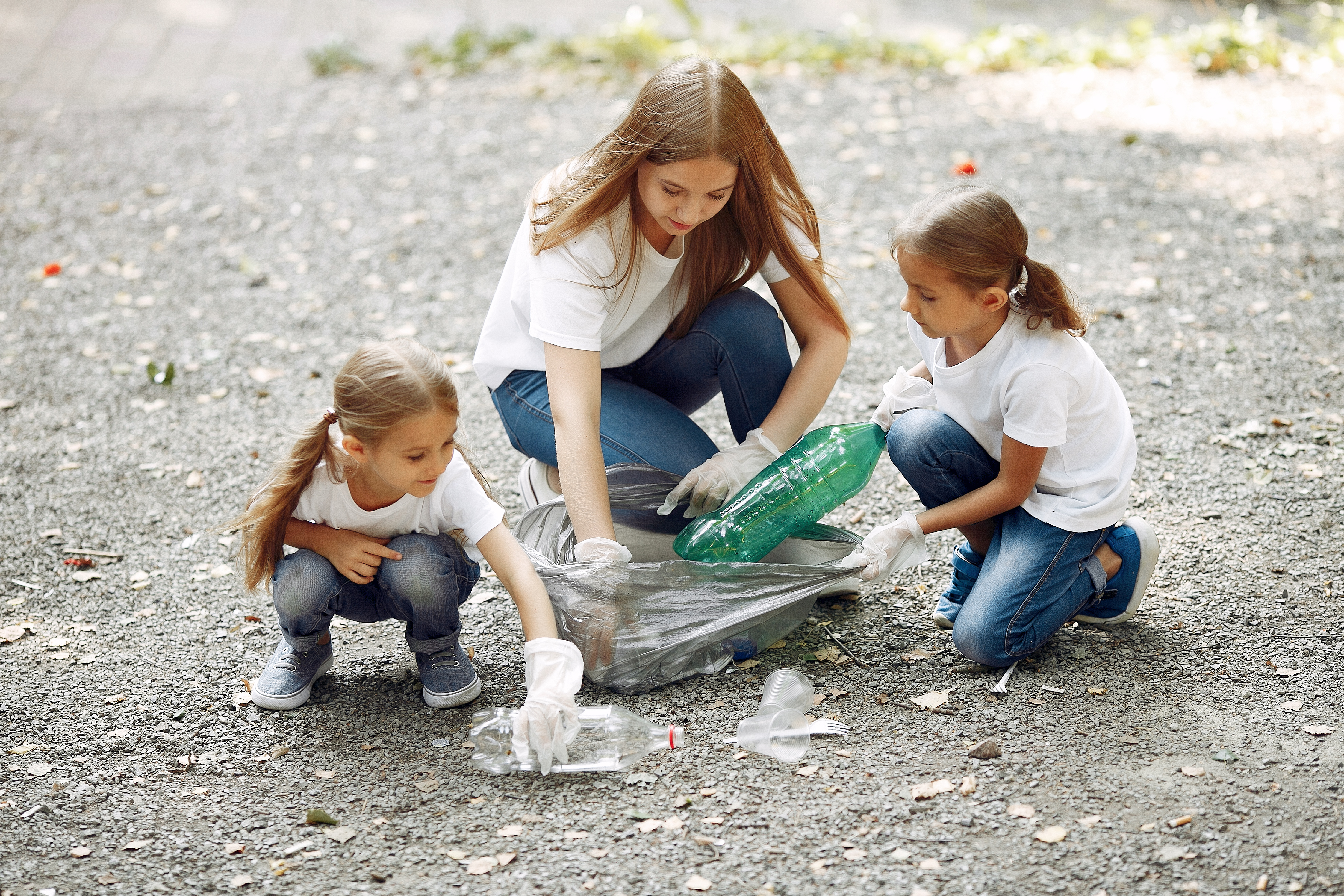
Climate change is becoming a very relevant and concerning reality in our everyday lives, particularly when it comes to our future generations. Now, more than ever, climate change features very high up there on the list of our collective and individual responsibilities, and rightly so. This may be partly in response to our awareness of COP26– the 26th United Nations Climate Change Conference of the Parties, recently held close to home across the pond in Glasgow, Scotland. The conference lasted for 12 days from 1st - 12th November and was attended by over 120 world leaders who share the same objective - to slow global warming, as it continues to impact lives at a worrying rate.
We want to know (naturally) what we can do to help. Is it possible to reduce global warming to the committed temperature of 1.5C? What does this even mean?
The good news is that we need not get too caught up with the numbers. Instead, we can focus on how we, in our highly influential roles as Parents or Early Years Educators, can educate, influence, and mould the mindset of our children - the next generation – to whom we fully owe the effort of doing so.
We CAN make small, simple changes within our own environments to make an immediate impact. It is also our adult responsibility to help mould our children’s mindsets to set them up for continuing to overcome this challenge.
With our Children…
BE HONEST with children, in an age-appropriate way. It is OK to tell them we need to take action and why. Tell them that their small actions do really make a big difference, and that they are worth making these changes.
The current rates of usage and consumption of available resources are simply unsustainable and cannot continue. It is OK for children to know this.
DEMONSTRATE YOUR GENUINE PRIDE in children for being mindful and making the changes their one world depends on. Make a big deal. Praise them for taking any small action they can do to help (placing an item in the recycling bin, the compost, coming to school with a reusable drinks bottle or a reusable sandwich covering… planting a single seed – it ALL makes a difference!)
LEAD BY EXAMPLE. Children are hard-wired to watch and listen closely to how we adults approach things in order to learn. The message we seek to give children will soon lose its momentum if we ourselves are inconsistent, disinterested, or skeptical. What we do and how we behave therefore matters and is key to imprinting inter-generational thinking.
Within our Early Years Settings:
Teaching Children about the control they have (with our adult support) over their own individual ecological footprint is empowering and important. Early Years Settings are unfortunately not yet currently eligible to apply for the Green School Flag recognition. However, since our Early Years services can cater for children up to age 5/6 years of age (quite a long time in a child’s early life on the planet), this should not deter us from making the practical required changes. Achieving a Carbon Neutral Preschool is possible – so, begin with getting INSPIRED!
Look at this one in Melbourne (Albert Park Preschool), Australia’s first ever early education service to achieve Carbon Neutral certification from the Department of the Environment and Energy in September 2019.
While the certification is a momentous achievement for this preschool, the actions and steps taken to get to that point are within our own immediate abilities now. Any step we can take in the same direction is significant. When these actions are collective, the impact is real.
It starts with the Mindset…
Getting the support of the local community is the starting point to success. Advertising the mission to become a Green Preschool is likely to draw attention from families and local businesses who share the same passion. Hold a Green Preschool Mission meeting and invite members of the community to attend, share information and ideas, make suggestions, and get on board with the concept. Conduct an online survey to gauge people’s thoughts on the project. Use your social media platforms to make some noise in relation to the Green Preschool mission. Collaboration can be a powerful support.
Services already on the right path…
One full daycare service Canavan Byrne visited had collaborated with a local farmer who provided a basket of fresh local organic vegetables and eggs on a weekly basis, cutting down the need to purchase these in plastic wrappers from the supermarket. The children were brought regularly to the farm on an outing to involve themselves directly in growing and watering (with harvested rainwater!) the vegetables they themselves were consuming. Another preschool service Canavan Byrne visited did not permit tinfoil or clingfilm, or plastic once-use drink bottles in children’s lunches. Instead, a local business provided a discounted price on zero waste eco-friendly reusable sandwich bags. When so many parents signed up to the idea, the business owner actually personalized the colourful bags with each child’s favourite colour and name.
Another service proposed they would replace all of their light bulbs with LED ones and each week and replace 2 plastic toys/educational aids with wooden replicas with a view to becoming a ‘plastic-free’ learning environment. The children from each pod took a vote on which plastic toys would be nominated to go to the charity shop each week. This was a gradual, simple but empowering way of involving children in decision making and choices that will impact their future.
A conversation with one service provider recently gave us plenty of food for thought here at Canavan Byrne. This service has had a ‘Meat-Free Monday’ for the past 3 years and a compost ‘worm house’ in the outdoor space. I was introduced to each of the hungry compost-churning worms by name to include ‘Colin’ and ‘Wilma’. This Preschool nominated on rotation a ‘climate change captain’ to carry out some serious duties to include ensuring the worms get a generous feeding of banana skins, staff member’s used tea bags and coffee grounds, their chef’s potato skins, and their own used cardboard and paper to munch on. This preschool also decided to sacrifice a 2X1 metre area of their outdoor space to grow their very own Preschool Forest and Irish wildflower pollinator garden. In it, they also put a 5-star Bug Hotel, and an ‘Air Bee-and-Bee’, which they examine and enhance regularly.
Another Preschool Canavan Byrne had the privilege of visiting had only solar-powered ‘green’ batteries in use for their battery-operated educational toys and learning aids. The children knew all about how this worked and why it was important. When I asked the question about when the sun says ‘adios’ and hides behind clouds (as it tends to often do in Ireland), the children were only thrilled to tell me that an LED lightbulb (one that is in use anyway) could be used to charge the ‘green’ batteries indoors, and all about the solar panel on the roof of the preschool that collected energy from the sun and stored it for the cloudy days. I was also enthusiastically informed that even on cloudy days, solar energy is still sent down to earth from the sun! This preschool also committed to the use of energy efficient appliances and natural eco-friendly cleaning products and recycled paper/art supplies. The company who supplied these eco-friendly materials were given a generous plug by the service on their social media platforms.
One service we visited used an electric transport vehicle in use to escort school-aged children to and from their National Schools on a daily basis. The children had taken a huge interest in the way in which the vehicle was regularly charged, its zero-emission, and its impact on their own carbon footprints. The pride they took in being part of the electric transportation was clear, particularly in the name they chose for the car: “The Clean Queen”.
It is easy to become overwhelmed with the pressure to change. Therefore, one step at a time is enough. To introduce one small change at a time is significant, even if it starts with a conversation with children, a simple story, or a picture. Consider writing one change at a time into your service policies and continue to review that change over time. Remember, it is essential that any change made to your policies maintains full compliance and adheres to the Child Care Act 1991 (Early Years Services) Regulations 2016 and the Child Care Act 1991 [Early Years Services] (Registration of School Age Services) Regulations 2018.
Share this article

-and-School-Age-Childcare-(SAC)---1280x720-thumb.jpg)