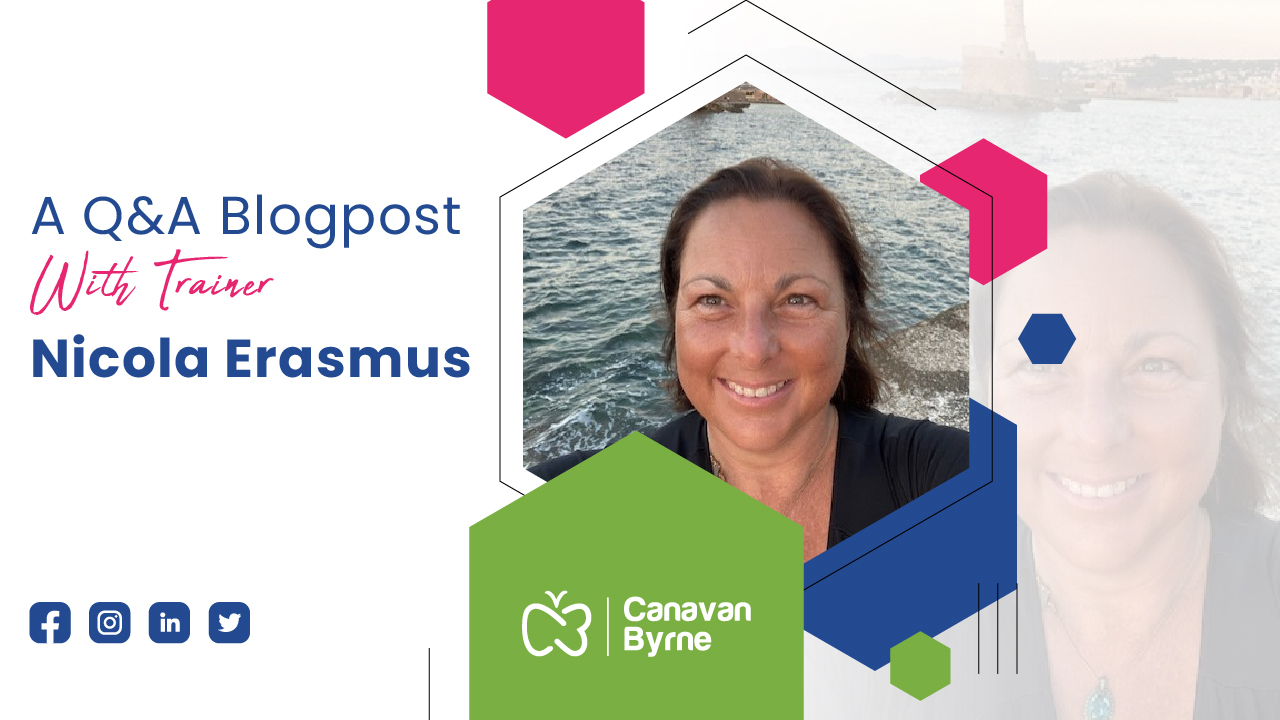
Q1: Can you tell us a little bit about your qualifications and how you got into setting up "Inspire Child Development Centre"?
Nicola: I originally hail from South Africa and have been living in Ireland for 22 years. I studied Occupational Therapy and Psychology in South Africa. I have completed the LINC course, SNA and currently completing Early Years degree in Ireland. I initially worked in community service and then in a "chain" service. I set up my own early years service in Naas, County Kildare, catering for babies to Afterschool. Due to a number of factors and wanting to move back to OT, this preschool service was closed, and Inspire Child Development Centre began to provide Occupational Therapy and an early years intervention pre-school, catering for children 3-5 years of age in Naas.
Q2: How long have you been delivering training with CB, and what is your favorite part about facilitating training webinars?
Nicola: Probably one of my favorite aspects of work is providing webinars/training sessions through Canavan Byrne. I've lost count of the years, but about 7 years!! I thoroughly enjoy being able to share knowledge, skills, and experience with others.
Q3: In your opinion, what is the importance of Early Years staff attending webinars?
Nicola: Webinars are a great tool as they are cost-effective (minimizing travel) and flexible, allowing practitioners to fit the training into their schedules. The early years sector is always evolving, requiring practitioners to stay updated with new research and best practices. Training webinars offer a constant source of new knowledge, ensuring ongoing professional growth. Webinars provide opportunities to deepen understanding in specific areas (e.g., child development, curriculum planning). Acquiring new skills empowers practitioners to provide high-quality care and support to children. Webinars can address specific challenges faced by early years practitioners (e.g., inclusion, behavior management). Online training platforms foster collaboration and networking among early years practitioners from diverse settings. Interactions with peers allow sharing experiences, ideas, and best practices. The training allows practitioners to adapt their practice accordingly to meet current expectations. Continuous training enhances confidence levels by equipping practitioners with up-to-date knowledge and skills. Confidence positively impacts relationships with children, families, and colleagues.
Q4: Can you talk us through some of your most popular webinars coming up in the next few months with CB?
Nicola: Two of my most popular webinars are:
- Supporting and Facilitating “Positive Behavior”: This webinar provides a great introduction to key research and strategies that can be used in the classroom and should be embedded in policies and procedures for the service.
- “Introduction to Sensory Processing”: This is a newer webinar that focuses on understanding research and the unique sensory systems of individuals. It explores how to ensure that children are engaged and have their sensory needs met.
Q5: Are any of your webinars relevant to parents or mainly directed at EY educators?
Nicola: The webinars that would be of particular interest to parents are the "Supporting and Facilitating Positive Behavior" and "Sensory Processing" ones.
Q6: What is your top tip/piece of advice for our readers to know?
Nicola: Top tip in terms of early years: we are laying the foundations for these children's brains!
In addition to the webinars mentioned above Nicola also delivers a wide range of topics including how to become an “Effective Room Leader”, “Understanding and Responding to Biting” and “Revitalise your Baby Room”.
We are currently scheduling Nicola's Autumn webinars. They will be available shortly.
Share this article